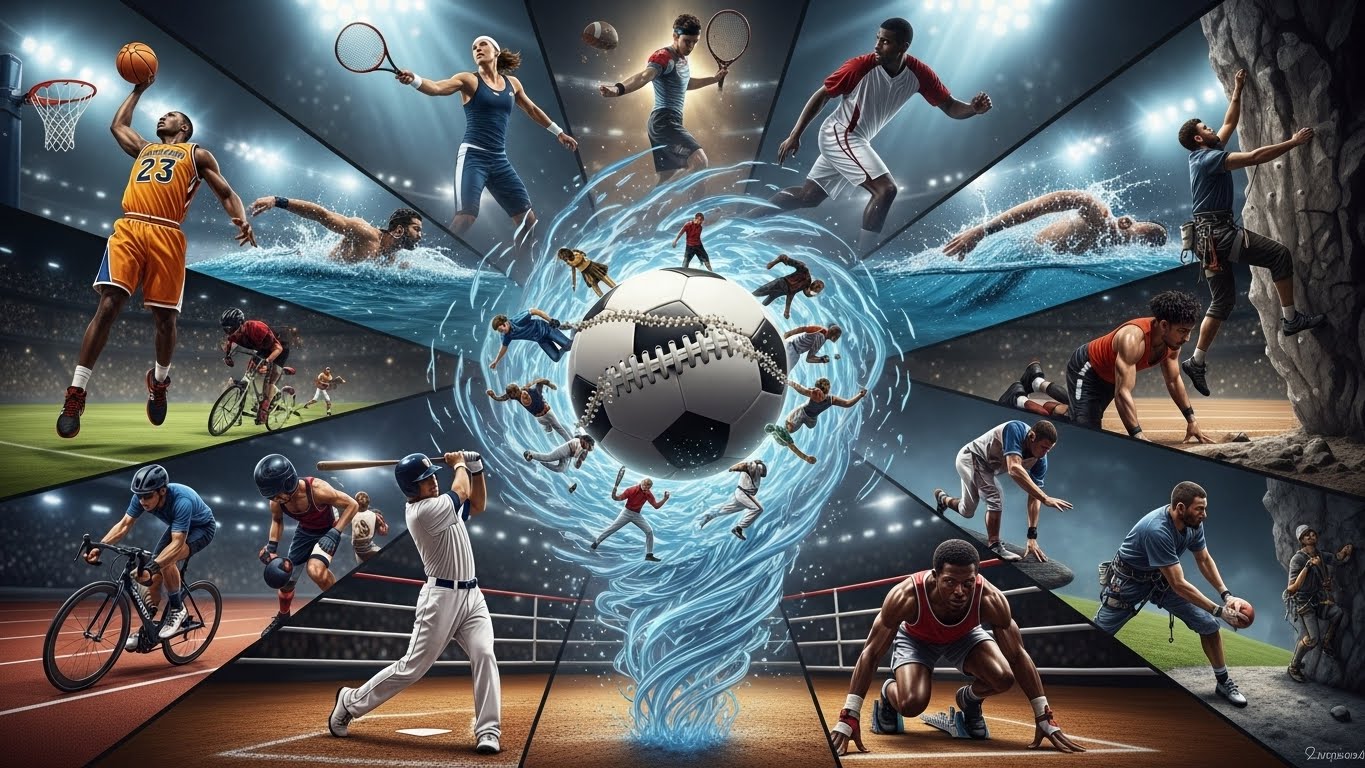

Sports are an integral part of human society, and their influence extends far beyond the playing field. Whether it’s the sense of unity created during international competitions, the economic boom sparked by major sporting events, or the social movements fostered by athletes using their platforms for change, sports shape and define cultures, economies, and societies in profound ways. This blog post will explore how sports have influenced the world, the role they play in modern society, and their impact on social change, the economy, and global culture.
The Historical Roots of Sports and Their Cultural Significance
The origins of sports can be traced back to ancient civilizations. From the gladiatorial games in ancient Rome to the Olympic Games in Greece, competitive activities have always been a way for societies to display strength, skill, and unity. In ancient Greece, the Olympic Games were held in honor of the gods and became a symbol of both athletic excellence and spiritual reverence. These games, which started in 776 BC, were not just about competition but about bringing different Greek city-states together in peace. The idea was that through competition, individuals could demonstrate their skills and their devotion to their country, and the gods would reward their strength and resolve.
Sports in ancient Rome, however, were often far more brutal. The gladiatorial games, which involved armed combatants fighting to the death, were held as public spectacles in massive arenas like the Colosseum. These contests were not only a form of entertainment but also a demonstration of the Roman Empire’s power and dominance. Although the nature of these sports was violent, they still reflected important aspects of Roman culture, such as their appreciation for valor, power, and order.
As societies developed over time, sports began to evolve into a more organized and structured form. During the Middle Ages, various types of jousting and archery contests became popular in Europe, especially among knights. These contests allowed for individuals to demonstrate their physical prowess and honor. However, it was during the 19th century, particularly in Britain, that sports as we know them today started to emerge. It was here that the first organized football (soccer) matches were played, along with the codification of rules for games like cricket, rugby, and tennis.
The Rise of Modern Sports: A Global Phenomenon
By the late 19th and early 20th centuries, sports had undergone significant changes. Organized leagues and clubs were established, and the rules of many sports were standardized. Sports were no longer just about casual recreation but had become big business. As the world became more connected through advances in transportation and communication, so too did sports begin to spread across borders. With the advent of radio and later television broadcasts, sports could be shared with audiences far beyond the confines of local stadiums.
In the United States, for example, baseball became the “national pastime” in the late 1800s, and by the 20th century, it had developed into one of the country’s most profitable sports. As the popularity of baseball grew, so did the creation of major leagues, the establishment of broadcasting deals, and the emergence of sports as a major form of entertainment. This trend also occurred in other countries with football, basketball, and tennis becoming global sports.
The Olympic Games, which were revived in 1896, became a central fixture of the global sporting calendar. Athletes from around the world competed against one another not just for personal glory but to represent their nations. The Olympic Games symbolized the peaceful competition between nations and promoted ideals of sportsmanship, fair play, and unity. Today, the Olympic Games have become one of the most-watched events globally, transcending borders, languages, and cultures.
The globalization of sports has been further amplified by the rise of international leagues, tournaments, and events. The FIFA World Cup, which first took place in 1930, is a prime example of how sports have transcended local boundaries. With countries like Brazil, Germany, Argentina, and Italy having won multiple titles, the World Cup brings together people from all over the world in a shared celebration of football. Professional leagues such as the National Football League (NFL), Major League Baseball (MLB), and National Basketball Association (NBA) have also grown into international brands, attracting fans and players from every corner of the world.
Sports as a Tool for Social Change
Sports have often been at the forefront of social change. From racial equality to gender rights, athletes have used their platforms to challenge societal norms and spark important conversations. In many cases, sports have become more than just games; they’ve become the stage for political and social movements.
One of the most significant moments in sports history occurred in the 1968 Olympics when Tommie Smith and John Carlos, two African-American sprinters, raised their fists in a Black Power salute during their medal ceremony. This powerful act of protest was not just about the athletes themselves but was meant to bring attention to the racial injustice and inequality faced by African Americans in the United States. The image of their raised fists became an iconic symbol of the civil rights movement and sparked debates about the intersection of sports and politics.
Similarly, the actions of Muhammad Ali, who refused to serve in the Vietnam War on moral and religious grounds, made him an international figure of resistance and defiance. Ali’s decision to stand up for his beliefs, even at the expense of his boxing career, made him one of the most iconic athletes in history and also helped to further the civil rights movement.
In recent years, athletes continue to use their platforms to highlight social issues. Colin Kaepernick’s decision to kneel during the national anthem before NFL games sparked a national conversation about police brutality and racial inequality in the United States. His act of protest, though controversial, was part of a larger movement that called for greater accountability and justice for marginalized communities.
Women’s sports have also undergone significant changes in the past century, and the fight for gender equality in sports continues to make progress. The passage of Title IX in the United States in 1972 was a landmark moment in ensuring equal opportunities for female athletes in educational institutions. Since then, the visibility and prominence of women’s sports have increased, with events such as the Women’s World Cup in football and the Women’s National Basketball Association (WNBA) gaining more recognition and support. Women like Serena Williams, Megan Rapinoe, and Simone Biles have become global icons, breaking barriers and paving the way for future generations of female athletes.
The Economic Impact of Sports
Sports are not just about competition and entertainment; they are a multi-billion-dollar industry that generates significant revenue and creates jobs on a global scale. From sponsorship deals to ticket sales, broadcasting rights, and merchandise sales, the economic impact of sports is staggering.
The commercialization of sports has resulted in lucrative deals for professional leagues, athletes, and sponsors. In the United States, the National Football League (NFL) generates billions of dollars in revenue annually, largely driven by its television rights deals, sponsorships, and merchandising. Similarly, the NBA and Major League Baseball are also major drivers of economic activity in the United States, with global reach and influence.
International sporting events like the FIFA World Cup and the Olympics have an even larger economic footprint. Hosting these events brings a host of economic benefits to the host country, including job creation, increased tourism, and significant infrastructure investments. The 2018 FIFA World Cup in Russia, for example, generated billions of dollars in revenue for the host nation, including ticket sales, tourism, and merchandise. Likewise, the 2008 Beijing Olympics helped to drive significant economic growth in China, showcasing the country’s infrastructure and boosting its global stature.
In addition to the revenue generated by major events, sports also have a considerable impact on local economies. Cities with professional sports teams or those that host large events see increases in tourism, job creation, and business activity. Stadiums and arenas, along with the services they provide, are key contributors to local economic growth. In many cities, sports teams serve as a focal point for community pride and identity, strengthening the local economy through increased consumer spending.
The Role of Technology in the Future of Sports
As technology continues to advance, its impact on sports is becoming increasingly significant. From enhancing the fan experience to improving athlete performance, technology is revolutionizing the way we experience sports.
In terms of fan experience, innovations like virtual reality (VR) and augmented reality (AR) are changing how spectators engage with sporting events. VR allows fans to experience games from the perspective of players, while AR can overlay real-time statistics, replays, and player data onto broadcasts, making the viewing experience more interactive and engaging.
Wearable technology has also had a profound impact on how athletes train and compete. Devices that monitor heart rate, speed, distance, and other performance metrics have become an essential tool for athletes in all sports. Data analytics, powered by artificial intelligence (AI), help coaches and teams make more informed decisions, optimize player performance, and reduce injuries.
Esports, or competitive video gaming, is another area where technology is making a significant impact. What started as a niche hobby has now grown into a multi-billion-dollar industry, with professional teams, major tournaments, and millions of fans worldwide. Esports is reshaping the definition of what constitutes a sport and has the potential to rival traditional sports in terms of global reach and economic impact.
The Future of Sports: Inclusivity and Continued Growth
The future of sports looks promising, with an increasing emphasis on inclusivity and accessibility for all. Efforts are being made to provide opportunities for athletes of all abilities and backgrounds to participate in sports. Disability sports, such as the Paralympic Games, continue to grow in popularity and visibility, while women’s sports are increasingly being recognized as valuable and deserving of equal opportunities and coverage.
With the continued advancement of technology, the sports industry is poised for even greater innovation. From AI-powered performance analysis to virtual fan experiences, the future promises new ways for athletes to perform and for fans to engage with their favorite sports.
Conclusion: The Everlasting Impact of Sports on Society
Sports are far more than just entertainment; they are a cultural, economic, and social force that influences every corner of the globe. From their early beginnings as a form of physical competition to their current status as multi-billion-dollar industries, sports have played a significant role in shaping the societies we live in today. As technology continues to evolve, and as social and cultural attitudes continue to shift, sports will undoubtedly remain at the forefront of global discussions about unity, change, and progress.
In a world that is increasingly interconnected, sports serve as a universal language that transcends borders, backgrounds, and beliefs. Whether they are used to challenge social norms, drive economic growth, or provide moments of collective joy, sports will continue to shape the future of society for generations to come.