The Paralympic Games are more than a sporting event; they are a celebration of resilience, courage, and the limitless possibilities of the human spirit. Since their inception, the Paralympics have provided a global stage for athletes with disabilities to showcase not only their talent but also their determination to redefine what is possible. Every edition of the Games has delivered stories that transcend sport, reminding the world that physical limitation does not equate to limitation of willpower, ambition, or excellence. These inspirational moments have moved millions, challenged perceptions, and inspired new generations of athletes to dream bigger. To look at the most inspirational Paralympic moments is to look at human triumph in its purest form, where adversity is met not with surrender but with defiance and brilliance.
The Paralympics trace their origins to 1948, when Dr. Ludwig Guttmann organized a competition for World War II veterans with spinal cord injuries at the Stoke Mandeville Hospital in England. His vision was to use sport as a tool for rehabilitation and reintegration, and what began as a small event would grow into the global movement we now know as the Paralympic Games. Since then, athletes have repeatedly shown that disability is not a barrier to greatness. One of the earliest inspirational moments came during the Rome 1960 Paralympics, the first official Games, when the world saw athletes from 23 countries compete in front of an international audience. For many, simply witnessing these competitors demonstrate their abilities on a global stage was revolutionary, planting seeds of inclusion and respect that would flourish in the decades to come.
Among the most iconic figures in Paralympic history is Trischa Zorn of the United States, a visually impaired swimmer who competed in seven Paralympic Games from 1980 to 2004. Zorn’s achievements are staggering—55 medals, including 41 golds, making her the most decorated Paralympian of all time. But what makes her story truly inspirational is not just the quantity of medals but the longevity and dominance she displayed across multiple decades. Zorn’s performances were a reminder that excellence is not defined by limitations but by commitment, discipline, and the pursuit of perfection. Watching her glide through the pool with speed and grace redefined what audiences thought possible for blind athletes and inspired countless swimmers worldwide.
Equally inspirational was the story of Natalie du Toit from South Africa, who lost her leg in a motorcycle accident at age 17. Instead of retreating from sport, she returned with an unbreakable spirit, not only excelling in Paralympic swimming but also making history by competing in the 2008 Beijing Olympics in open-water swimming. Her presence in both the Olympics and Paralympics sent a powerful message about inclusion and the universality of athletic ambition. Her courage to step into both arenas challenged stereotypes and served as a beacon for athletes with disabilities who dream of competing at the highest levels of sport.
The Paralympics are also full of moments where triumph transcends personal glory to make a statement for entire communities. In 2012 at the London Paralympics, British sprinter Jonnie Peacock lined up against Oscar Pistorius, then the most famous Paralympian in the world, in the T44 100m final. The race captivated global attention as Peacock, still just a teenager, surged to victory in front of an electrified home crowd. His win not only symbolized the rise of a new star but also represented a generational shift, proving that the Paralympics were not about a handful of stars but about a broad spectrum of elite athletes pushing boundaries. The roar of the London crowd and the global broadcast of the event demonstrated how far the Paralympics had come in capturing mainstream attention.
Another unforgettable Paralympic moment came from Ellie Simmonds, also in London 2012. Born with achondroplasia, a form of dwarfism, Simmonds became one of the faces of the Games, winning gold and breaking world records in swimming. The sight of her standing proudly on the podium, tears streaming as the anthem played, became one of the defining images of those Games. For young people with disabilities, Simmonds represented proof that they too could aspire to greatness. Her popularity and charisma also helped bring Paralympic sport to a wider audience, demonstrating that Paralympians were not only athletes to admire but role models to celebrate.
Paralympic inspiration often comes not just from victories but also from moments of extraordinary perseverance. At the 2004 Athens Paralympics, Iranian powerlifter Siamand Rahman began his journey toward becoming the world’s strongest Paralympian. By Rio 2016, he achieved a feat that seemed unthinkable—lifting 310 kilograms, over three times his body weight, and breaking the world record in the men’s over-107kg category. Rahman’s achievement was not just about strength but about redefining what was possible in Paralympic sport. His story became an inspiration far beyond the powerlifting community, symbolizing unshakable determination. Tragically, Rahman passed away in 2020, but his legacy remains as one of the most inspirational in Paralympic history.
The Games have also been a platform for moments that blend sport and social impact. In the 1964 Tokyo Paralympics, the Japanese people were introduced to disability sport in a way that transformed national attitudes. The Games created a lasting legacy in accessibility and inclusion across Japan, laying the groundwork for decades of progress. Fast forward to the Tokyo 2020 Paralympics, delayed by the pandemic but finally held in 2021, the Games symbolized resilience not only for athletes but for humanity itself. Despite the challenges of COVID-19, athletes arrived ready to compete, and their performances served as a reminder that the human spirit can endure and triumph in the face of global adversity.
One of the standout stories of Tokyo 2020 was that of Afghan athletes Zakia Khudadadi and Hossain Rasouli, who managed to reach the Games despite the turmoil in their country following the Taliban takeover. Their participation alone was an inspirational triumph, symbolizing courage and the unifying power of sport in the face of political and social upheaval. For millions watching, their journey was a testament to hope and perseverance against unimaginable odds.
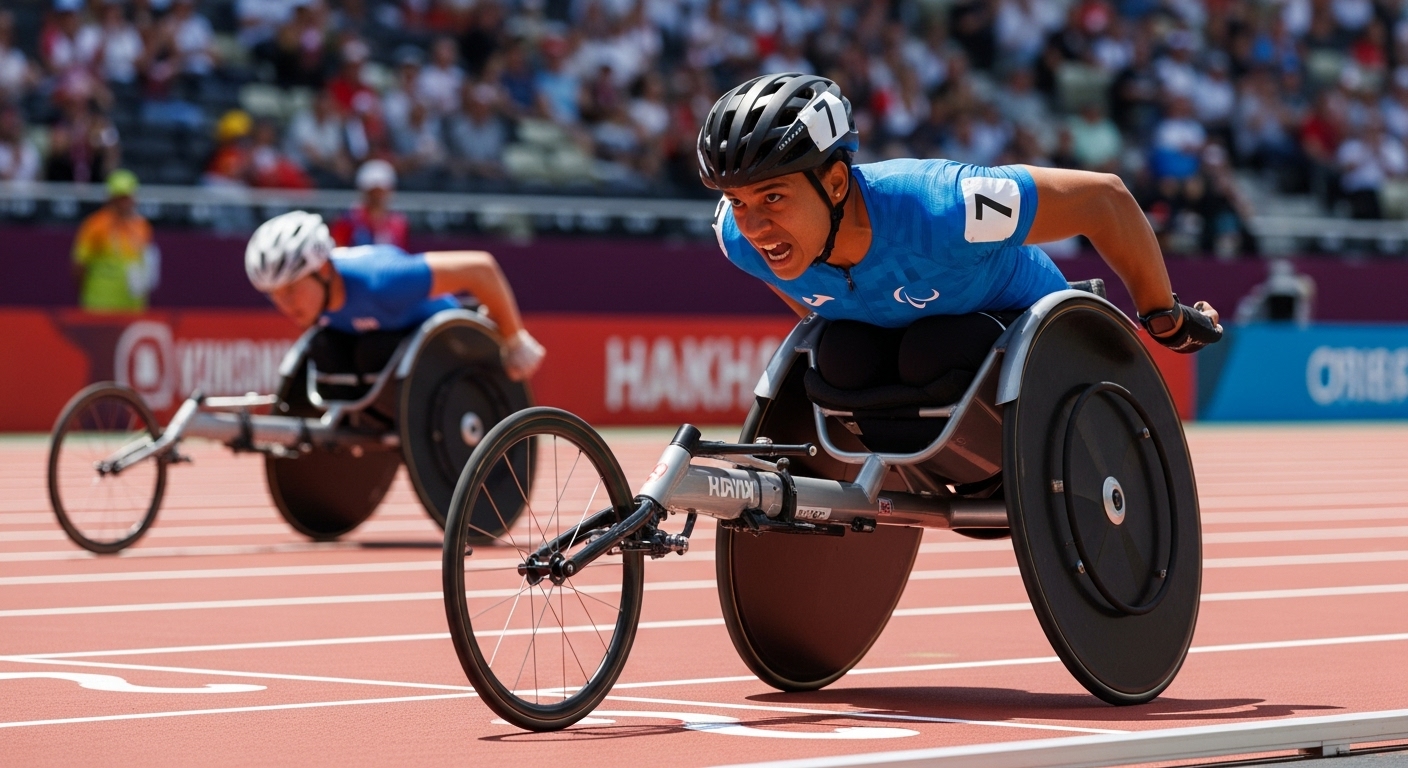
Paralympic inspiration also comes in the form of records that capture the imagination. Brazilian swimmer Daniel Dias, often compared to Michael Phelps, retired after Tokyo 2020 as the most decorated male Paralympic swimmer in history with 27 medals. His dominance over four Paralympic Games inspired not only Brazilians but swimmers across the world. Similarly, Tatyana McFadden of the United States has become a legend in wheelchair racing, winning multiple Paralympic medals and dominating marathons globally. Born with spina bifida and spending the early part of her life in a Russian orphanage, McFadden’s journey from hardship to the pinnacle of sport is one of the most compelling narratives in Paralympic history.
There are also deeply emotional moments that go beyond statistics. In 2008 in Beijing, South African swimmer Natalie du Toit and fellow Paralympians were greeted with standing ovations as they competed in front of packed crowds. For many, the ovations symbolized a global recognition of Paralympians as equals to Olympians, deserving of the same respect, admiration, and celebration. The Beijing Games marked a turning point in global broadcasting, reaching millions and changing perceptions about disability sport.
At times, the most inspirational Paralympic moments are those of athletes who transform personal tragedy into triumph. Take the story of Matt Stutzman, known as the “Armless Archer” from the United States, who competed in archery using his feet. Born without arms, Stutzman not only competed but also won a silver medal in London 2012. His incredible technique, precision, and confidence amazed spectators and showcased the limitless adaptability of the human body when paired with determination. Watching Stutzman load, draw, and release arrows with his feet was not only awe-inspiring but also a lesson in overcoming challenges with creativity and perseverance.
Equally powerful was the story of Marieke Vervoort, the Belgian wheelchair racer who won gold in the 100m T52 at London 2012 and silver in Rio 2016. Living with a degenerative muscle disease, Vervoort competed while enduring immense pain. Her courage to perform at the highest level despite her struggles deeply moved audiences. Vervoort later chose euthanasia in 2019, but her legacy remains one of bravery, honesty, and inspiration. She used her platform to speak about living fully despite illness, and her Paralympic performances continue to inspire discussions on resilience and dignity.
The Paralympic Games have also showcased extraordinary stories of inclusion and community. In Athens 2004, when blind sprinter Marla Runyan competed alongside guides who ran beside her, the synchronization between athlete and guide became a symbol of trust and teamwork. These partnerships are uniquely inspirational, highlighting that success in Paralympic sport often comes from collaboration, communication, and mutual respect. Watching a visually impaired runner synchronize stride for stride with their guide is one of the most moving demonstrations of unity in sport.
The Games have inspired millions not only with athletic achievements but also with the power to change attitudes. London 2012 is often remembered as a watershed moment in Paralympic history, dubbed by many as the event that “changed the way people see disability forever.” Packed stadiums, wall-to-wall media coverage, and unprecedented global attention made Paralympians household names. Athletes like David Weir, Jonnie Peacock, Ellie Simmonds, and Hannah Cockroft became superstars, and their performances shifted the global narrative around disability from one of pity to one of admiration and respect.
Perhaps the true inspiration of the Paralympics lies not only in record-breaking moments or medals won but in the cumulative effect of seeing athletes from around the world defy stereotypes and push the boundaries of human achievement. Every Games delivers new names and new stories that leave spectators inspired. Whether it is a wheelchair basketball team fighting to the last second, a visually impaired cyclist sprinting to the line with a guide, or a swimmer breaking records with one arm, the common thread is the resilience and determination that echo beyond sport.
The most inspirational Paralympic moments remind us that sport is about more than physical ability—it is about courage, perseverance, and the refusal to accept limits. They teach us that greatness comes in many forms and that true champions are defined not just by victories but by the battles they overcome. The Paralympics continue to inspire the world, not as a side note to the Olympics but as a powerful movement in their own right, showing us the extraordinary heights that can be reached when determination meets opportunity. Each Games, each story, and each athlete adds another layer to this rich history, ensuring that the Paralympics will always stand as a beacon of inspiration for generations to come.