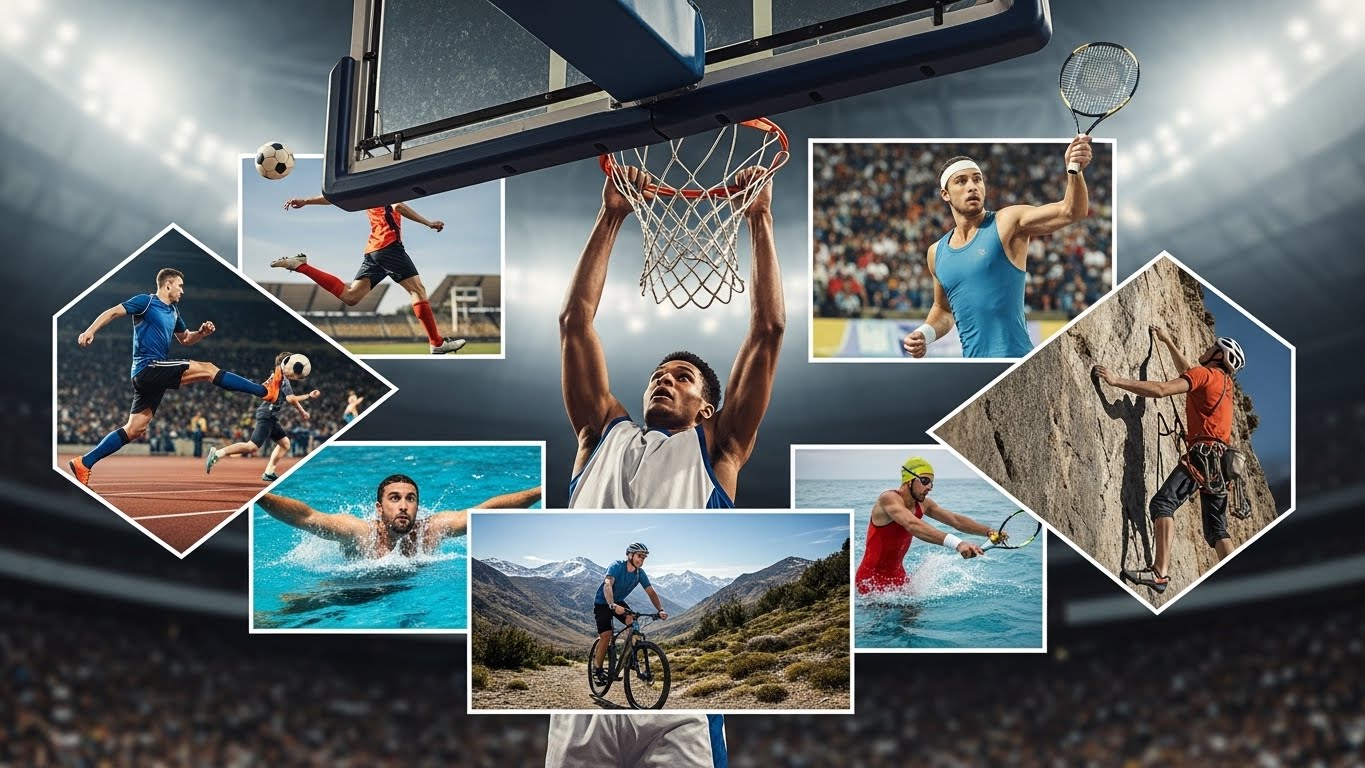
Sports have always been more than just games. They are a mirror to human endurance, creativity, discipline, and the constant pursuit of excellence. From the dusty fields of ancient civilizations to the gleaming stadiums of the modern world, sports have united people, built nations, and told stories of triumph and tragedy. Every athlete, every fan, and every moment of competition contributes to the living, breathing heartbeat of sport. It is an arena where emotions run high, where dreams are forged, and where humanity’s finest virtues are tested and celebrated.
The Ancient Roots of Competition
Long before the invention of modern rules or international federations, humans engaged in athletic contests as a way to prove strength, skill, and survival. In ancient Greece, the Olympic Games were not merely sporting events but acts of worship and civic pride. They embodied ideals of honor, glory, and excellence—values that continue to echo in every sporting arena today. The Greeks celebrated the harmony between body and mind, believing that physical achievement was as noble as intellectual wisdom.
In other parts of the world, sports took different forms. The Mayans played the Mesoamerican ball game, which combined athleticism with ritual significance. In China, martial arts evolved into both combat disciplines and graceful arts of movement and meditation. Meanwhile, Africa’s rich cultural heritage gave rise to running, wrestling, and rhythmic games that remain deeply embedded in communal traditions. Across time and geography, sport has always been a language of human expression—a way for people to connect, challenge, and celebrate one another.
The Rise of Modern Sports
As the world changed through industrialization and globalization, so too did sports. The nineteenth century was a turning point. Games that had been played informally for centuries began to adopt official rules, governing bodies, and organized competitions. Britain, in particular, played a key role in codifying many sports that are now global, including football, cricket, and rugby. What had once been local pastimes became international spectacles.
The modern Olympic Games, revived in 1896 by Pierre de Coubertin, brought this transformation to a grand stage. The Olympics symbolized not just physical prowess but also peace, unity, and cooperation among nations. Over time, the Games evolved to include athletes from every corner of the world, representing different cultures, abilities, and dreams. They demonstrated that even amidst political tensions, the love of sport could bring people together in a shared spirit of respect and admiration.
The Essence of Team Sports
Team sports hold a special place in the human heart because they combine individual brilliance with collective harmony. Football, basketball, cricket, and hockey are not just contests of skill; they are tests of communication, leadership, and sacrifice. In a team, success depends not only on talent but also on trust. Each player must perform their role while supporting others, creating a rhythm that can only be achieved through shared effort.
Consider the beauty of a football match: the tension as players weave across the field, the synchronized strategies, and the moment when a goal unites thousands in a single roar of joy. In basketball, the quick passes, the selfless assists, and the final shot all speak to a shared understanding that one person’s glory depends on the teamwork behind it. These sports teach values that extend far beyond the field—cooperation, discipline, and resilience in the face of adversity.
Team sports also highlight leadership. Captains and coaches become symbols of strategy and morale. They guide, inspire, and sometimes carry the emotional weight of the entire team. The lessons learned from teamwork—how to communicate under pressure, how to handle defeat, and how to celebrate victory gracefully—are lessons that apply to every walk of life.
The Solitary Greatness of Individual Sports
While team sports celebrate unity, individual sports showcase the power of self-mastery. In tennis, athletics, boxing, gymnastics, and swimming, the athlete stands alone, facing the challenge with only their mind and body to rely on. Every victory is personal, and every failure is a direct confrontation with one’s limitations.
The discipline required to succeed in individual sports is extraordinary. Athletes spend countless hours training, refining techniques, and building mental toughness. The isolation of preparation can be grueling, yet it is in that solitude that champions are forged. When a sprinter bursts across the finish line or a gymnast lands a perfect routine, what we witness is the culmination of years of dedication, sacrifice, and self-belief.
Individual sports also reveal the psychological side of competition. The inner dialogue, the fight against doubt, and the pursuit of perfection all define the human spirit. These athletes embody resilience, reminding us that the greatest battles are often fought within.
The Global Power of Football
Few phenomena unite the world like football. From the packed stadiums of Europe and South America to the dusty playgrounds of Africa and Asia, football speaks every language. It requires little equipment, only passion and imagination. Children grow up dreaming of emulating their heroes, from Pele and Maradona to Messi and Ronaldo, and those dreams drive generations forward.
The FIFA World Cup stands as one of the most watched events on the planet, transcending borders and cultures. Every four years, nations come together to celebrate not only sport but identity and pride. The emotions that pour from the stands—the tears of joy, the heartbreak of loss—demonstrate football’s power to connect billions of lives.
But beyond the glamour and fame, football has also been a force for social change. It has united divided nations, challenged racial barriers, and inspired movements for equality. Clubs and players have become voices for inclusion and hope, proving that sport can be both entertainment and empowerment.
The Art of Endurance: Athletics and the Pursuit of Limits
If any sport captures the raw essence of human capability, it is athletics. Running, jumping, and throwing are primal movements that define our physical nature. In athletics, there are no complex tactics or elaborate equipment—only the body against time, gravity, and distance. The simplicity of it makes victory all the more profound.
The marathon, in particular, stands as a symbol of endurance. From the legendary story of Pheidippides to modern races spanning 42 kilometers, the marathon represents perseverance against pain. Each step is a test of will, each finish line a triumph over human frailty. Sprinters, meanwhile, embody explosive power, defying the boundaries of speed. Field events such as pole vault or javelin throw celebrate precision, coordination, and controlled strength.
Athletics also carries a moral lesson about persistence. Records are made to be broken, yet each generation of athletes inspires the next to go faster, higher, and stronger. The track and field become laboratories of progress where human evolution plays out in real time.
Women in Sports: The Journey Toward Equality
The story of women in sports is one of courage, resilience, and transformation. For centuries, societal norms limited women’s participation in competitive athletics. Yet, pioneers challenged these boundaries, breaking stereotypes and opening doors for future generations. Figures like Billie Jean King, Serena Williams, Mia Hamm, and Simone Biles have redefined what it means to be an athlete, proving that talent and determination know no gender.
Women’s sports have grown into powerful platforms for empowerment. They inspire confidence, promote health, and challenge inequalities both on and off the field. Today, major tournaments in football, cricket, and tennis attract millions of viewers, signaling a long-overdue recognition of women’s athletic excellence.
Still, the fight for equality continues. Disparities in pay, representation, and media coverage remain issues across many sports. Yet the momentum is undeniable. Every victory by a female athlete is not only a personal achievement but a cultural milestone, a step closer to a world where all competitors are judged by skill, not stereotype.
The Mental Game: Psychology and Emotion in Sports
While physical strength and skill are crucial, the mind often determines victory or defeat. Sports psychology has become an essential part of modern training, helping athletes manage stress, focus, and confidence. Mental resilience—the ability to recover from setbacks and maintain composure—is often what separates champions from the rest.
Athletes must deal with immense pressure. They are scrutinized by media, fans, and their own expectations. In moments of tension, their capacity to stay calm and focused becomes their greatest weapon. Visualization techniques, meditation, and mindfulness are now integral tools used by athletes to enhance performance.
Equally important is emotional intelligence. Sports can bring out the best and worst in people, from moments of inspiring sportsmanship to acts of frustration. Understanding one’s emotions, channeling them productively, and maintaining respect for opponents are all parts of the mental artistry of competition.
The Role of Technology and Innovation
The modern era has seen technology revolutionize sports in unprecedented ways. Advanced analytics, wearable sensors, and video review systems have changed how athletes train and how fans experience games. Data-driven insights allow coaches to refine tactics and identify areas for improvement with precision. Equipment has become lighter, stronger, and more efficient, helping athletes reach new levels of performance.
Broadcasting and digital media have brought sports to global audiences, transforming athletes into icons and games into spectacles that capture the world’s attention. Virtual reality and augmented experiences are expanding fan engagement, while e-sports have created an entirely new dimension of digital competition. Yet, amidst this technological revolution, the heart of sports remains the same—the pursuit of excellence through effort and passion.
The Economics of Sports: Industry and Influence
Sports are not only cultural phenomena but also massive industries. From sponsorships and broadcasting rights to merchandise and tourism, the global sports economy generates billions of dollars each year. Major leagues like the NFL, NBA, and Premier League have become financial powerhouses that shape entertainment, advertising, and even politics.
However, this commercialization raises questions about balance. While professional athletes in top leagues earn fortunes, many grassroots programs and developing nations struggle to provide basic facilities. The challenge lies in maintaining the integrity of competition while ensuring that economic benefits reach communities and inspire participation.
Despite these complexities, the economic power of sports has undeniable positive effects. It creates jobs, builds infrastructure, and promotes unity. Cities that host major events often experience cultural and social rejuvenation, as people from all walks of life come together to celebrate a shared passion.
The Dark Side: Doping, Corruption, and Pressure
No exploration of sports would be complete without acknowledging its darker sides. The pursuit of glory sometimes leads to unethical choices. Doping scandals, match-fixing, and corruption have occasionally tainted the purity of competition. These issues remind us that sports, like society, must constantly guard against greed and deceit.
The immense pressure on athletes can also take a toll on mental health. The expectations to perform, the fear of failure, and the constant scrutiny can lead to burnout, anxiety, or depression. Fortunately, recent years have seen growing awareness and openness about these issues. Athletes speaking up about their mental well-being are helping redefine success, proving that strength includes vulnerability.
The integrity of sport depends on fairness, transparency, and respect for the rules. Anti-doping initiatives, ethical oversight, and education play crucial roles in ensuring that future generations can compete with trust and honor.
Sports and Society: A Mirror of Humanity
Sports reflect the societies in which they thrive. They expose cultural values, political struggles, and social dynamics. During moments of crisis or division, sports often become sources of hope and unity. When nations face hardship, victories on the field can lift spirits and remind people of collective strength. Conversely, injustices in society often find their expression through sports, as athletes use their platforms to demand change.
From the civil rights movement in the United States to global campaigns for equality and peace, sports have been a stage for activism. Athletes who take a stand remind the world that sport is not separate from life—it is a powerful part of it. Through the universal language of competition, they amplify voices and bring awareness to causes that transcend the game.
The Joy of the Fan: The Soul of Every Sport
No matter how skilled the athletes or how advanced the technology, sports would be empty without the fans. The cheers, the chants, the heartbreak, and the ecstasy of supporters give sports their soul. Fans are the lifeblood that keeps the spirit of competition alive. Whether watching from the stands, on television, or through digital screens, their passion creates an atmosphere that no other form of entertainment can match.
The bond between fans and teams goes beyond loyalty; it becomes a form of identity. Supporting a club, a nation, or even a single athlete often reflects personal values, community pride, and shared memories. In those moments when the crowd rises as one, when a city erupts in celebration, or when a silent prayer fills a stadium before a decisive moment, we witness the profound emotional connection that defines the world of sport.
The Future of Sports: Sustainability, Inclusion, and Global Unity
As we look toward the future, sports face both challenges and opportunities. Climate change, technological disruption, and evolving cultural values are reshaping how games are played and experienced. Sustainability has become a priority as organizers seek eco-friendly stadiums, reduced carbon footprints, and responsible consumption.
Inclusion remains a defining goal. Adaptive sports and the Paralympic movement have shown that athletic excellence is universal, regardless of physical or cognitive differences. The continued growth of women’s sports, the rise of mixed-gender competitions, and the embrace of diversity all point toward a more equitable and representative sporting world.
Ultimately, the future of sports lies in its timeless ability to inspire. No matter how advanced society becomes, the human desire to compete, to test limits, and to connect through play will never fade. The arenas may change, the rules may evolve, but the spirit remains eternal.
Conclusion: The Eternal Flame of Passion
Sports are a celebration of what it means to be human. They combine art and science, discipline and freedom, individuality and community. Every drop of sweat, every burst of applause, every moment of defeat or victory contributes to a universal story—one that unites generations across time.
The beauty of sports lies not just in winning but in striving, not just in records but in effort. It teaches us humility in success and courage in failure. It reminds us that while we may come from different backgrounds, we all share the same heartbeat when the whistle blows or the race begins.
In the end, sports are not merely games—they are the poetry of motion, the music of competition, and the eternal dialogue between human limits and boundless dreams. As long as there is passion in the human soul, the flame of sports will never die.